Business Vintage Logo Template
If you've ever flipped through a 1920s apothecary label, admired the embossed lettering on a boutique perfume bottle, or paused at a hand-printed café menu with delicate flourishes—you already know the quiet authority of vintage design. The Business Vintage Logo Template taps into that same timeless resonance, not as a nostalgic gimmick, but as a functional, adaptable design asset built for real-world branding needs.
A Retro Frame That Works—Not Just Looks Good
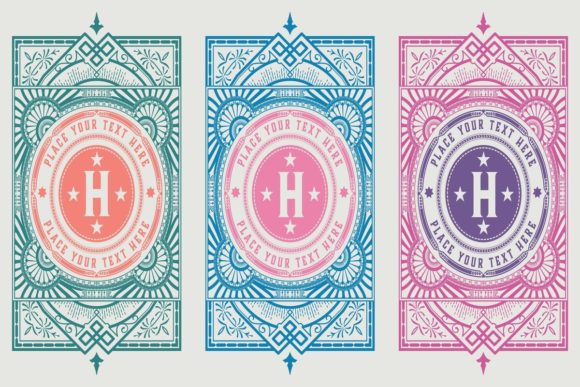
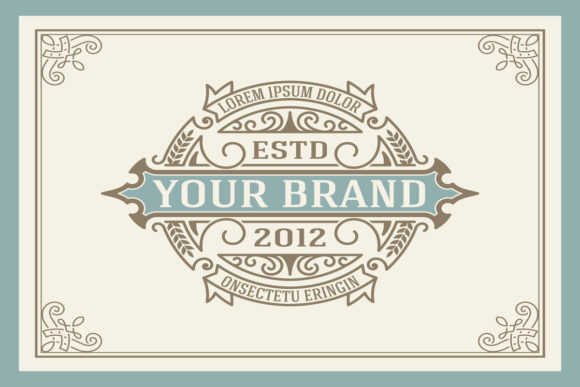
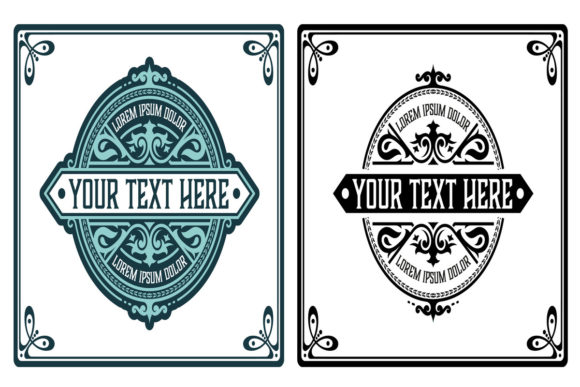
This isn’t just “old-looking” graphics slapped onto a blank canvas. The Business Vintage Logo Template features an elegant retro background with intentional negative space, balanced ornamental flourishes, and a subtle frame structure that guides the eye—not distracts from it. Think Art Deco symmetry meets mid-century restraint: clean curves, refined line weight, and spacing that breathes. It’s a display font in spirit—but delivered as a fully layered, editable vector template.
You get two carefully considered color variants—one warm sepia tone for organic, artisanal brands; one cool charcoal-and-cream palette for modern heritage positioning. Both are pre-set in CMYK, so what you see on screen translates reliably to print—no last-minute color shifts when your business cards go to press.
Where This Template Earns Its Keep
Designers reach for the Business Vintage Logo Template when they need instant credibility without sacrificing flexibility. It’s especially effective for projects where tactile quality and human craft matter: boutique hotel stationery, small-batch jewelry labels, restaurant menus printed on textured stock, or limited-run product packaging. Because it includes both EPS (vector) and high-res JPG files, you can scale it cleanly for a storefront window decal—or drop it into a social media banner without pixelation.
It also works surprisingly well in digital-first contexts—if used intentionally. A single use of the frame as a hero section background on a homepage, paired with clean sans serif body text, creates immediate contrast and hierarchy. The vintage element becomes a focal point, not the whole story. That balance is why marketers and content creators choose this template over generic “retro” clipart: it supports brand identity instead of overwhelming it.
Customization That Doesn’t Require a Design Degree
You don’t need Illustrator mastery to make this work. The template includes global color swatches—so changing the entire palette takes three clicks. Add your own logo mark, tagline, or monogram directly into the designated layers. Drop in a product photo or portrait, and the frame naturally frames it without cropping or guesswork. Even if you’re using it in Canva or Affinity Designer, the JPG version gives you a precise visual guide for alignment and proportion.
And because it’s built with commercial use in mind, you’re covered whether you’re designing for your own bakery or delivering assets to a client who sells handmade ceramics online. No attribution required. No hidden restrictions. Just a clean, professional-grade starting point.
Why “Vintage” Isn’t Just a Style Choice—It’s a Strategy
Vintage aesthetics signal intentionality. In a world of algorithm-driven feeds and disposable visuals, choosing a Business Vintage Logo Template tells your audience: *We pay attention to detail. We value craft. We’re not chasing trends—we’re building something that lasts.* That perception shift matters most for service-based businesses (like wedding planners or bespoke tailors) and premium physical goods (like leather journals or small-batch spirits), where trust and authenticity drive decisions more than price alone.
But here’s what many miss: vintage doesn’t mean illegible or impractical. This template keeps generous letter spacing, clear stroke contrast, and ample margin around key text areas—so your phone number stays readable on a 2x3" business card, and your boutique’s Instagram bio stays scannable on mobile. It respects readability first, ornamentation second.
Pairing It Right—Without Overcomplicating Things
Don’t overthink font pairing. If you’re adding custom type, stick with one strong contrast: a sturdy, neutral sans serif (like Montserrat, Lato, or even system fonts like Inter or Helvetica Neue) for body copy and contact details. Let the Business Vintage Logo Template hold the headline role—the name, the tagline, the visual anchor. Avoid stacking multiple decorative fonts. One vintage element is enough to set the tone.
For editorial design or blog graphics, use the template’s frame sparingly—as a border around a featured quote or a divider between sections. In packaging design, consider how the flourishes interact with your material: foil-stamped on kraft paper? Embossed on cotton rag? The template adapts because its lines are clean and purposeful—not fussy or overly dense.
Realistic Fit Checks Before You Commit
Ask yourself: Does my brand speak in warmth and tradition—or speed and disruption? Is my audience more likely to respond to hand-drawn charm or minimalist precision? If you run a tech SaaS startup targeting enterprise clients, this template may feel misaligned—even beautifully executed. But if you’re launching a neighborhood wine bar with curated selections and handwritten chalkboard menus? It’s a natural extension of your voice.
Test it with your actual content—not placeholder text. Type out your full business name, address, and phone number. See how it fits within the frame’s natural rhythm. Try both color variants against your existing brand colors. Print a draft on plain paper and hold it next to your current business card. Does it feel like an evolution—or a departure?
You’ll also want to review the included file types: EPS for full vector editing (logos, signage, large-format prints), JPG for quick mockups or platforms that don’t support vector uploads (like some email builders or basic CMS themes). There’s no OTF or TTF font file included—this is a logo *template*, not a typeface—and that’s by design. It gives you structure, not typography rules to break.
The Business Vintage Logo Template works because it’s specific without being limiting. It offers character—but leaves room for your voice. It delivers elegance—but never at the cost of function. Whether you're refining a decade-old brand or launching your first Etsy shop, it’s a thoughtful tool, not a shortcut. And in design, the most valuable tools are the ones you forget you’re using—because they simply let your work shine.